Client planning reference
Frequently asked questions, the Green Season month by month, what to pack, and everything a first-time safari client should know before they travel.
Frequently asked questions.
What should you wear and carry on safari?
Casual, neutral-coloured clothing — "bush casual." Sunscreen and hats are needed year-round; bring swimwear and a good pair of walking shoes.
What are the essential things you must remember?
Obtain proper travel and medical insurance — you never know when life will throw an unexpected curve ball. If you're on any medication, bring it along.
Will your special requests be accommodated?
If you have special interests or requests (a double bed, celebrating a special occasion), advise the camp, lodge or tour operator at the time of booking.
What's included in the nightly rate?
Rates generally include accommodation, all meals, tea/coffee, activities as specified, and select locally branded drinks at select properties.
What if you have special dietary requirements?
Let the respective camps and lodges know as soon as your safari is confirmed.
Do you get wildlife at camp?
Yes — most camps and lodges are unfenced. Follow the safety briefing you'll receive at every camp or lodge.
What's the policy on gratuities?
Provided you're satisfied with staff performance, feel free to tip accordingly, though you're under no obligation to. We recommend tipping your guide and tracker separately; a tip box is provided in each camp for other staff, and we suggest tipping them collectively the same amount as your guide and tracker — the contents are divided equally among staff working behind the scenes.
Are the same safaris available year-round?
Yes, though rates vary by season — you'll pay a bit more in peak periods.
Does South Africa share the same safari seasons as Botswana, Zambia and Zimbabwe?
No — Botswana, Zambia and Zimbabwe regard July to the end of October as peak season, whereas the opposite holds true for South Africa.
Why is July–October peak season in Botswana, Zambia and Zimbabwe?
Game viewing is said to be better when the bush is at its driest and rainfall lowest. Game concentrations improve as animals congregate close to water, making spotting easier.
What about malaria in this region?
Malaria isn't serious if you treat it seriously. The whole of northern Botswana, Kruger National Park, the Lower Zambezi and Victoria Falls are malaria areas — consult a physician or medical advisor before departure. The Welgevonden Private Game Reserve, by contrast, is not a malaria area.
The Green Season, month by month.
December–March is technically the "rainy season," but rainfall in Southern Africa is minimal compared to most places — usually quick afternoon thunderstorms that pass as fast as they arrive. Safari activities happen in the early morning and late afternoon regardless of season, coinciding with peak animal activity.
First rains
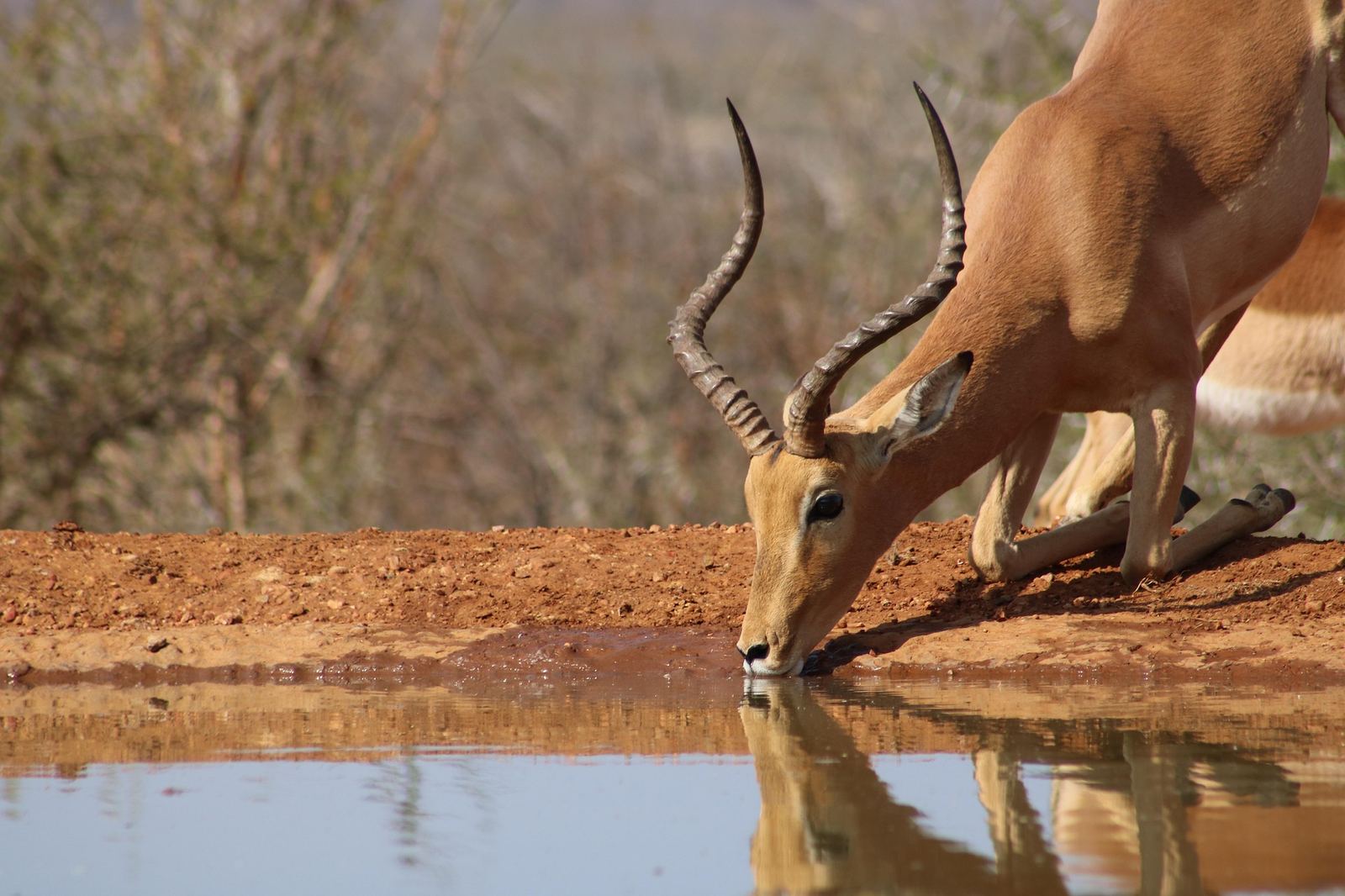
Game viewing slowly increases after the first rains (mid-November) as animals disperse to new vegetation. Birthing season begins with tsessebe, then impala and lechwe — predators are busy. Wonderful for photographers: action, colour and visibility over short green grass.
Green & growing
Impala complete lambing as wildebeest begin theirs. Regular thunderstorms keep pans full and grass brilliant green. Migrant birds arrive; dramatic skies and lightning add to December's magic, with warm, humid nights.
Peak breeding
Peak breeding time for colourful migrant birds, with wildflowers and brilliant green foliage. Warm days (30°C+) and nights (20°C+), with spectacular afternoon thunderstorms — an ideal month for photography.
Growth spurt
Ripe figs, flowering water lilies and a noisy, colourful Okavango Delta full of reed frogs. Butterflies, birds and frogs at their most active; afternoon rains continue with temperatures up to 40°C.
The Zambezi in spate
Victoria Falls is as powerful and dramatic as it gets — river rafting is often closed. In Botswana, marula fruit draws bull elephants tree to tree. Air is drier and rains less frequent, though still warm.
The turn
Night temperatures start dropping below 20°C. Cooler, misty mornings, especially over water. The impala rut is in full swing with dramatic clashes between rival males; trees fruit heavily, including the sausage tree.
Flood begins its journey
Flood waters from Angola begin reaching the northern Okavango Delta. Nights cool to around 15°C; buffalo group into large herds and elephant breeding herds grow near permanent water. Jackets are sensible for night drives.
Wild dog denning
African wild dogs begin searching for den sites — once denned, they're easy to find for 3–4 months. Coldest month-end nights (as low as 5°C), with dry, dusty conditions beginning to dominate.
The flood arrives
Botswana's floodwaters arrive from Angola just as dust and dryness pervade — a defining paradox. Leaves fall, grass shortens, visibility is excellent, and mokoro and boat trips open up new areas as water spreads.
Peak visitor season
Herds grow larger and competition for space near water rises. The bush is bare and dusty; daytime peaks average close to 30°C. A special, and busy, time of year.
Winter recedes
Night temperatures rise rapidly; days push into the 30s°C. Elephant and buffalo concentrate in even greater numbers — a time of plenty for lions. Carmine bee-eaters and other migrants return.
Peak drama
Really hot — day temperatures regularly exceed 40°C — but game viewing like nowhere else. Night drives are at their best, dust makes every scene dramatic, and the annual catfish (barbel) run brings fishing frenzies to the rivers.
What to pack.
Most safaris carry a luggage restriction, generally 20kg per person, matching most international airlines' economy-class allowance. Separate luggage into two sections: 13–14kg in the hold, 6–7kg as hand/carry-on — this matters because at some point on safari you may board a charter flight, where luggage must be in a soft bag.
Clothing
Lightweight cotton shirts and pants in neutral tones — sand, stone, khaki, green and olive. Long-sleeve shirts, short pants during the day with a tracksuit layer in winter, long pants at night (especially given the bugs). Always pack a lightweight, ideally waterproof jacket, a good sun hat, well-worn boots or sneakers (no new shoes), and swimwear. Most camps and lodges in Botswana, Zambia and Zimbabwe offer complimentary laundry.
Medical / first aid kit
- Insect repellent
- Sunscreen SPF 30–50
- Painkillers
- Nausea/diarrhoea remedies
- Probiotics
- Any medication you're currently on
Most camps and lodges do carry a first aid kit.
Extras & camera equipment
- Sunglasses — essential against the glare of sun and dust
- A good small flashlight
- Travel documents
- A good book to read
- Camera and lens(es), video camera, storage devices, adaptors and chargers
- Toiletries — avoid strong-smelling perfumes and aftershaves, which increase the chance of insect bites
Top tip: pack camera and video equipment, sunglasses, travel documents, a good book and an extra set of clothing in your carry-on. That way, should checked luggage not arrive with you, you'll still have a clean change of clothes.
 On safari
Safari logistics & client reference.
A day on safari — the routine
The day begins with a wake-up call at dawn, with guests in the guest area within 15–30 minutes for tea, coffee, yoghurt, cookies and fruit. The morning drive follows, with a stop roughly halfway for refreshments before returning to camp around 10:00 for breakfast or brunch. A rest period follows until around 15:00, then high tea and the afternoon activity — a sundowner stop just before sunset, then dinner after freshening up.
Arrival & what to expect
A representative will be holding a name board in the arrivals hall at your gateway airport. If no one is there to meet you: don't panic — confirm you're in the right place, ask around, then the help desk; after 30 minutes, call the emergency number provided by your booking company. At camp, staff meet you, carry your luggage, brief you on the daily routine and any wildlife-in-camp safety information, and show you to your room.
Getting more from your safari
Private vehicles: an additional fee for sole use of a safari vehicle (and guide, and tracker if applicable) — freedom to determine drive length, departure time and time at a sighting. Recommended for two couples, a family, or four friends travelling together, since the cost is shared. Private or specialist guides add expert knowledge on a subject — from archaeology to zoology — and help the safari run smoothly overall.
Accommodation types
Tented — canvas accommodation used where regulations restrict permanent building; dome, mini Meru, large Meru and deluxe tent types, fixed or mobile. Wood & thatch / traditional — generally cooler, and often elevated for game viewing from the room. Brick & mortar — permanent, "everything-proof" construction, usually with a thatch roof. Modern — concrete, steel, glass, iron and thatch combined.
Bathrooms range from shared ablutions (mobile safaris) through rustic en-suite (canvas basin, bucket shower, non-flush loo), en-suite (hot/cold running water, flush loo, shower or bath), full en-suite (separate flush loo, shower and bath) to deluxe en-suite (his-and-hers basins, luxury bath, inside and outside showers). Electricity is solar, generator or (in South Africa, and around Kasane, Victoria Falls and Hwange) mains — bring all chargers plus a universal adaptor, as plug points differ between South Africa and Botswana/Zambia/Zimbabwe.

Cuisine
Breakfast typically offers yoghurts, fresh fruit, cereals, cold meats, cheese and a cooked option (eggs, bacon, tomatoes, mushrooms, beans, toast). Lunch is lighter — quiche, pasta, a simple beef or chicken dish, salads. Dinner brings snacks with pre-dinner drinks, a starter, a choice of two or three mains, vegetables, salads, dessert and a cheese board — plus in-between snacks and high teas throughout the day.
Children on safari
Children are generally classified as under 12. Seek expert medical opinion before taking any child under 6 on safari; establish whether the camp has a family unit and a children's programme; get a price for a private vehicle (highly recommended); never take a child under 12 on a walk outside the immediate camp area; and make sure a swimming pool is available, especially November–April. Charter flights and road transfers price children by seat, not by age, even where the accommodation rate is discounted.
The Big Five
Elephant, black rhino, buffalo, lion and leopard — the term originated among big-game hunters as the five species reputed most dangerous to hunt. Today it denotes the species most sought on safari, extended informally to either rhino species and, in jest, a "Little Big Five": elephant shrew, buffalo weaver, rhino beetle, ant lion and leopard tortoise. An African safari is about far more than five species.
The cost of a safari
Factors with real bearing on price: the name and reputation of the area or reserve; the operating company's reputation and marketing spend; the size of the camp's exclusive-use area and number of beds; vehicle density; additional facilities (spa, gym); the style of cuisine; in-room facilities; the electricity source; and the season. In South Africa, safaris are generally quoted in Rand (ZAR); in Botswana, Zambia and Zimbabwe, US Dollars. Common rate bases: B/B (Bed & Breakfast), D/B/B (Dinner, Bed & Breakfast), FB (Full Board), FB&A (Full Board with activities), FI (Fully Inclusive — all meals, accommodation, activities and select drinks).
Safari rules worth repeating to a client
- Bigger is not better when it comes to the number of beds in a lodge.
- Great guiding trumps a bad lodge every time — bad guiding ruins even the greatest lodge.
- If the linen's thread count is featured in the brochure, the game count is probably the inverse.
- Over 70% of interesting predators are mainly active at night.
- More than 3 vehicles at a single sighting is a crowd.
- Malaria isn't serious — if you take it seriously.
Turn this into a quote.
Every reference on this page feeds directly into the itinerary we return within 24 hours of your brief.